Privacy Policy
Cookie Policy
Legal Notice
CUONO GAGLIONE - Italy
CONTACT: alpittorecg70.af@libero.it
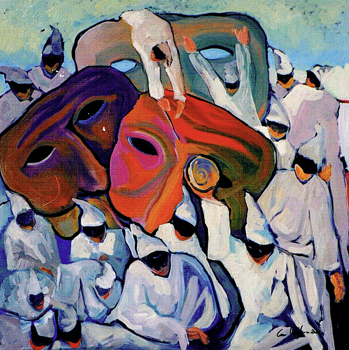
Pulcinella Monument
Pulcinella’s Dream
oil on canvas cm 90 x 90 Private collection
oil on canvas 80 x 100 cm Private collection
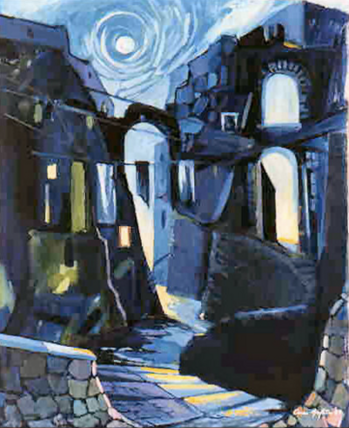
Blue alley
Sicily, land of love
oil on canvas cm 80 x 100 Private collection
Mixed media 80 x 100 cm Private collection
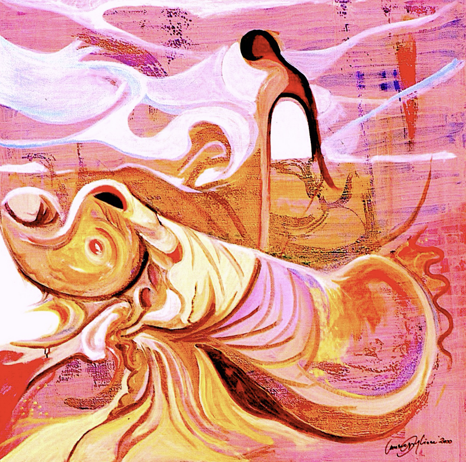
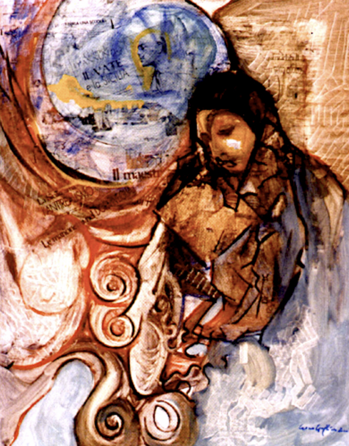
The origin of life
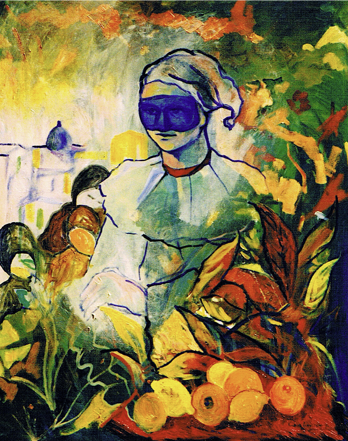
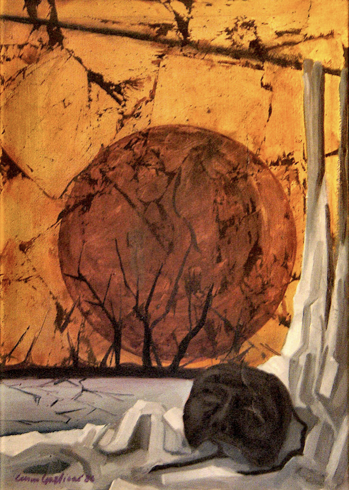
The Mask and the Moon
oil on canvas cm 90 x 90 Private collection
Mixed media and gold leaf 60 x 80 cm Private collection
His Biography
Artist Cuono Gaglione was born in Acerra in 1947 but currently lives in Modica. He has devoted himself to painting since 1959; he studied at the Naples Art Institute, also attending the Painting Teaching program from 1965 to ’71. His guiding masters of color were Striccoli, Chiancone, Verdecchia, Toma, de Siena and Cajati. During his stay in Germany in ’71, he was part of the neo-expressionist group in Heidelberg. His return to Italy was marked by major successes, and his participation in the most qualified national and international exhibitions—earning acclaim, recognition and awards—confirms this. Among the first prizes we recall those of the President of the Republic, the Chamber of Deputies, the Oscar of Painting in Germany, the Dante Prize in Florence, the Golden Neptune in Bologna, and the P. Picasso Biennial in Naples. Among the Sicilian awards: the Quasimodo Prize in Modica, Valle dei Templi in Agrigento, the Sacred Art Exhibition in Caltagirone, the Donnalucata Open-Air Painting event, and many others both on and off the island and beyond national borders. His works appear in many public and private collections in prestigious cities such as New York, Dublin, Paris, Rome, Naples, Venice, Nuremberg, Brooklyn, and dozens of large and small towns throughout Italy.
From ’71 to today, Cuono Gaglione’s works have traveled the world. Among recent appearances, we find him in Rome in ’83 for the Fipav World Championships Competition, in Germany in Fürth for the European Contemporary Art Exhibition, in Sweden for the International Painting event, in ’93 in Venice with the solo show “G.H. Centrale”, in 2000 in Ragusa with a solo exhibition at the Provincial Palace, in 2001 in Vittoria, in March 2002 in Ragusa at the Hotel Ionio and on April 8 again in Vittoria. These are only a small part of his appearances; in fact, we could go on listing many more. But Gaglione’s activity is not only exhibitions and competitions: indeed, numerous are the logos he created for contests, including that for CONI “Sport for All”, Rome ’82; for the Junior Volleyball World Championships, Rome ’84; for the Football World Championships “Italia 90” in ’86; and for the 5th Centenary of the Discovery of America in ’87. Gaglione has also produced various covers for books and magazines, since his painting is an expression of feelings, poetry, pathos and artistic memory in which many authors—poets, writers and others—have seen themselves reflected.
His works appear in public and private collections in:
Eberbach, Nuremberg, Blomfield, Easton. Bed Minister, Brignais, Duisburg, Bridgewater, Paris, Rome, Naples, Venice, Genoa, Milan, Como, Palermo, Ragusa, Turin, Syracuse, Macerata, Pavia, Bologna, Ancona, Piazza Armerina, Florence, Trapani, Modena, Grosseto, Spinazzola, Acerra, Modica, Aversa, Vittoria, Ortona, Caltagirone, Comiso, Gela, Augusta, Herculaneum, Vizzini, Rozzano, Sorrento, Bordighera, Crotone, Falconara, Bitonto, Tolmezzo, Pachino, Sarno, Heidelberg, Stuttgart, Lyon, Carrara, Perugia, Assisi, Bari, Verona, Brescia, Berlin, Salerno, Reggio Calabria, Cosenza, Enna, Santiago de Chile, Athens, Frankfurt, Vienna, Sydney, Tokyo, Los Angeles, Buenos Aires, Madrid, Amsterdam, Brussels, Bruges.
On permanent display at:
Modern Art Gallery New York–Chamber of Commerce Ragusa–Municipalities of Giarratana, Francofone, Modica, Pozzallo, Acerra, Sarno, Vittoria, Civic Museum Caltagirone–Pulcinella Mask Museum Acerra, Modern Art Gallery Lecce, Churches of S. M. di Betlemme Modica, S. Luca, S. Cuore Modica, Madonna delle Lacrime Modica, Diocesan Historical Museum Caltagirone, Naples Art Institute, Halls of the Divine Zeal Sisters Rome and Modica, Modern Art Academy Brescia, Fortress Museum Civitella del Tronto.
Since 1995 he has devoted himself to solo exhibitions, including:
Naples–Maschio Angioino, Verona–Galleria La Tavolozza, Milan–La Bitta, Genoa–La Mediterranea, Venice–Grand Hotel Centrale, Bari–Art Expo, Brescia–Il Covo, Rome–La Giara, Acerra–Castello Baronale, Vittoria–Centro Giovanile Polivalente, Ragusa–Caffè dell’Arte, Ragusa–Regional Provincial Hall, European Parliament of Brussels, Fortress of Civitella del Tronto, European Parliament of Strasbourg.
These three exhibitions with the meaningful titles “PRECIOUS THINGS OF THE TWO SICILIES” “MY LAND” “SICILY, LAND OF LOVE AND HONOR” were dedicated to the denied history of the South, to natural and artistic beauty, with particular attention to figures, myths and mythology ranging from Magna Graecia to the present day.
Gaglione has published numerous illustrated catalogs and monographs of his works; among the most important we recall:
THIRTY YEARS OF EXPERIENCES
A LIFE FOR ART
TESTIMONIES,
PULCINELLA THE WANDERER
NAPULE TRASH AND SUN
ANTHOLOGY
HOMAGE TO THE TWO LANDS
METAMORPHOSIS
THE PAINTING OF CUONO GAGLIONE
SIRENS, NYMPHS
MYTHS OF THE TWO SICILIES
PRECIOUS THINGS OF THE TWO SICILIES
MY LAND
SICILY, LAND OF LOVE AND HONOR
60 YEARS OF LOVE FOR ACERRA
Gaglione has also ranged into other fields of the visual arts, creating book covers and logos for world events (European Year of Music, football and volleyball world championships).
Those who took an interest in his artistic growth include:
Marina Cekmareva, PhD in Philosophy and art critic. Works at the Hermitage Museum in St. Petersburg.
Carlo Striccoli, Alberto Chiancone, Radames Toma, Carlo Verdecchia, Alfonso de Siena: (Masters at the Naples Art Institute), Prof. Mario Agosta (Art critic), Carmelo Arezzo (Art critic), Enzo Assenza (Sculptor), Antonio Bevilacqua (Writer), Giuseppe Bongiardina (Journalist), Mario Cagetti (Art critic), Saverio Cannata (Journalist), Renato Civello (Art critic), Gianni Contino (Journalist), Marco D’Anto’ (Journalist), Anna Maria Schieble De Vito (Art critic), Giovanni Dormiente (Writer), Lorenzo Fertitta (Journalist), Agostino Focone (Writer, Poet), Helene Krueger (Painter), Franco Mancini (Journalist), Angelo Manna (Journalist, Poet, Southernist), Prof. Aniello Montano (Art critic, Writer), Vittorio Napolitano (Art critic), Giuseppe Pelligra Maltese (Art critic), Alfredo Bonita Oliva (Art critic), Giovanni Pluchino (Journalist), Domenico Pisana (Writer, Poet), Nello Punzo (Art critic), Franco Russo (Writer, Poet), Ferdinando Sigona (Writer, Journalist), Attilio Sigona (Journalist), Guido Schiavottiello (Art critic), Lorenza Trincali (Writer, Poet), Michele Giardina (Journalist), Piero Pace (Journalist), Noemi Marzullo (Journalist), Felice Bellero (Art critic), Domenico Amoroso (Writer), Giovanni Carbone (Writer), Gino Baglieri (Painter, art critic), Enza Celiento (Journalist), Giovannella Galliano (Journalist), Michele Barbagallo (Journalist), Marina Salvadore (Journalist, Writer, Southernist historian), Stefania Longo (Journalist), Domenico Iannantuoni (Journalist), Alessandro Romano (Journalist), Francesco Paolo Catania (Journalist), Reno Bromuro (Art critic), Mauro Caiano (Director), Antonio Ciano (Writer), Mons. Antonio Riboldi (Bishop of Acerra), Valentina Gaglione (Painter, Poet), Milena Nicosia (Painter), Gino Giammarino (Journalist), Giuseppe De Gennaro (Commentator), Aurelio Badolati (Journalist), Lorenzo Del Boca (President of the Italian Order of Journalists), Roberto Bigliardo (MEP), Antonio Pagano (Writer, Journalist), Antonio Serao (Journalist), Antonio Tagliamone (Publisher), Maria Giovanna Tumino (Art critic), Eugenio Preta (Secretary General UEN European Parliament), Franceso Mennitto (Pulcinella Museum Acerra), Luciano Somma (Poet), Gianni Mattioli (Journalist), Giuseppe Sciortino Giuliano (Journalist), Cuono Perroni (Journalist), Nicoletta Damiano (Publisher), Giorgio Liuzzo (Journalist), Marina Cappitti (Journalist), Giovanni Brigandì (Art critic, poet), Leonardo Echeoni (Journalist), Massimo Pacilio (Director, Painter), Fernando Galano (Musician), Eustatio Paolicelli (Historian), Vincenzo Maria Pulcrano (Actor, Poet, Art critic), Michele Tanzillo (Journalist), Maria Villani (Sports journalist), Marinella Paesano (Journalist), Anna Iozzino (Art historian), Giuliana Gargiulo (Journalist, Actress, Writer, Art historian), Marina Cekmareva (art critic at the Hermitage Museum in St. Petersburg).
With the following media outlets:
The Times–Malta. Kolbacksadalen Stockholm. Mittle Bayerische Zeitung Germany. La Notte. Famiglia Cristiana. La Repubblica. La Nazione. Roma. Il Mattino. Il Tirreno. La Sicilia. Il Giornale di Sicilia. Il Diario. Corriere dello sport. La Gazzetta del mattino. Il Giornale del Sud. La Gazzetta del Sud. Il Secolo D’Italia. Nuovi Orizzonti. Liberarte Cultura. Insieme. Telemontecarlo. Video Mediterraneo. Canale 21. Tele Iblea. Il Quadrato.
L’Artista. La Sonda. La Gazzetta dello sport. Il Limone D’oro. Il Focolare. Areopago Cirals. Il Democratico. Il Pungolo Verde. Logos. La voce della Provincia. Il corriere di Modica. Domani Ibleo. Giornale di Scicli. Ragusa Sera. Vita Diocesana. L’Avvisatore. Il Lavoro Del Tirreno. Il Corriere di Roma, Il Centro Abruzzo, . La Città. L’Isola, Il Brigante, Rai. Video Golfo. Antenna Sicilia. Teleradio Akery. Local radio. Napoli Network. Telenova, Video Mediterraneo, Napoli Nova, Caserta 24 ore, yesart, 2Righe
He is also featured on various online sites.
His Resume
• 1971 solo show in Florence
• 1972 European Biennial T.D. Greco
• 1973 Costa Trophy Naples
• 1974 Costa Trophy Naples
• 1975 Costa Trophy Naples
• 1980 Provincial Exhibition Ragusa
• 1981 National Exhibition Catania
• 1982 British Art Fair in the City London
• 1982 International Prize Milan
• 1982 Tribute to Murillo Rome
• 1982 Marguttiana Carrara
• 1982 Biennial Syracuse
• 1982 International Exhibition Genoa
• 1982 Costa Trophy Naples
• 1982 International Exhibition Lecce
• 1982 National Exhibition Catania
• 1982 National Exhibition Genoa
• 1982 National Exhibition Rome
• 1983 Europa 2000 Milan
• 1983 FIPAV World Championships Rome
• 1983 Sport for All Rome
• 1983 Salon des Exposition des Nations Paris
• 1983 National Exhibition Milan
• 1983 Sea Biennial Rome
• 1983 Gate of the Lions Reggio Calabria
• 1983 solo show Genoa
• 1983 Oscar Prize Regensburg (Germany)
• 1983 Costa Trophy Naples
• 1983 National Exhibition Genoa
• 1983 International Exhibition Fürth (Germany)
• 1984 International Prize Hallstahammar (Sweden)
• 1984 Costa Trophy Naples
• 1984 European Year of Music Rome
• 1984 Arte Expo Texas Dallas (USA)
• 1984 S. Ambroeus Awards Milan
• 1984 Art Expo International Geneva (Switzerland)
• 1984 International Art Exposition Washington (USA)
• 1985 Contemporary Ragusa
• 1985 International Prize “Nettuno d’Oro” Bologna
• 1985 Meeting with the Lagoon Venice
• 1985 “Jewel of Candia” Trophy Massa Carrara
• 1985 solo show Ragusa
• 1985 Grand Prix d’Art Internationale Milan
• 1985 International Prize Florence
• 1985 Sea Biennial Rome
• 1985 Costa Trophy Naples
• 1985 Art Exhibition Viareggio
• 1985 La Finelliana Carrara
• 1985 European Exhibition Rome
• 1985 Meeting with Art Syracuse
• 1985 solo show Ragusa
• 1986 International Graphics Exhibition Athens (Greece)
• 1986 Pro UNICEF Ragusa
• 1986 National Competition Syracuse
• 1986 Costa Trophy Naples
• 1986 International Prize Hallstahammar (Sweden)
• 1986 Italia 90 Rome
• 1986 City of Viareggio Viareggio
• 1987 The Discovery of America Rome
• 1987 UNICEF charity auction Ragusa
• 1987 International Competition Pordenone
• 1987 P. Picasso Biennial Naples
• 1995 solo show Rome
• 1996 Maschio Angioino solo show Naples
• 1996 La Bitta Milan solo show Milan
• 1997 La Mediterranea solo show Genoa
• 1997 G.H: Centrale solo show Venice
• 1998 Art Expo solo show Bari
• 1999 Il Covo solo show Brescia
• 1999 La Giara solo show Rome
• 2000 Province RG solo show Ragusa
• 2001 H Ionio solo show Ragusa
• 2003 Solo show Caffè dell’Arte Ragusa
• 2003 Preziosi 2 Sicilie solo show Brussels (Belgium)
• 2004 Terra Mia solo show Civitella d. Tronto
• 2005 solo show Strasbourg (France)
• 2006 solo show “La cour des arts” Brussels (Belgium)
• 2009 50th Year of artistic activity - Acerra Baronial Castle
• 2012 5th Neapolitan Music Cruise, artist invited to exhibit in traveling shows in: Catania, Naples, Livorno, Villefrance, Valencia, Ibiza, Tunis.
• 2013 6th Neapolitan Music Cruise, artist invited to exhibit in traveling shows in: Bari, Katakolon, Izmir, Istanbul, Dubrovnik, Venice.
• 2015 8th Neapolitan Music Cruise, artist invited to exhibit in traveling shows in: Bari, Katakolon, Santorini, Corfu', Kotor, Venice.
• 2016 9th Neapolitan Music Cruise, artist invited to exhibit in traveling shows in: Naples, Messina, Valletta, Palma de Mallorca, Ibiza, Barcelona, Marseille, Genoa.
• 2017- Charity exhibition ROME
• 2018 - 60 years of love for Acerra - Pulcinella Film Festival - Castello dei Conti
• 2019 Acerra Castello dei Conti - S O S PEACE “The colors of Peace: me, others and the seven colors of the rainbow”. Exhibition/Conference
• 2020 Rome NUMEN Gallery group show of contemporary artists
• 2020 Rome - Virtual group exhibition In the Name of Love - The thousand faces of love
• President of the Republic Award
• President of the Chamber of Deputies Award
• Dante Award Florence
• 5th Biennial Rome
• Nettuno d’Oro Bologna
• Pennello d’Oro Milan
• Lagoon Biennial Venice
• Pordenone Award
• Murillo Award Rome
• Painting Oscar Germany
• Califano Award Castellammare di Stabia
• Art & Culture Award Naples
• Hallsthammar Award Sweden
• Costa Award Naples
• Columbus in History Genoa
• Viareggio Award
• European Parliament Award of Brussels and Strasbourg
• Ambassador worldwide of the Pulcinella Museum of Acerra
• Ambassador of Neapolitan culture worldwide
• “Pulcinella” Award Pulcinella Film Festival 2018
The Critique
"Cuono Gaglione and the Informal Image" by Reno Bromuro
At first glance, Cuono Gaglione’s paintings immediately reveal that we are facing a predominantly lyrical artist, appreciated by other painters. Let us take, for example, the first canvas that comes to hand: «Women of the South», the extraordinary energy generated by images in decomposition, as if it were an announcement to civilization, that the woman of the South, «that one» used to walking with her head down, with shoulders bent from too much work, is disappearing and from the matter the new woman springs forth; even if, for master Gaglione, they still do not have a clearly defined face. This canvas and «Reapers» strongly recall the «Roman School» of Mafai, of Scipione, of Mazzacurati, of Caputi, etc… in the rarefaction of the informality of the figures and in the compactness of color, they carry a note of modern spirituality, modernly felt without sentimentalism, or alchemical tears to move the visitor. As for the other paintings shown in this exhibition of his most recent works, they further reveal a seriousness and a level of commitment such as to make his a lasting art. Equally in keeping with the demands of authentic art are the austerity of the subjects, a stubborn execution bordering on the brutal, and a deliberately restricted range of colors: here is the novelty that detaches him from the informality of the «Roman School»—there, one represents the disintegration of a society, evolved in the memory of past glory, by the will of a totalitarian drive; here, instead, from the rubble of the cultural breakdown of a certain class of the South one wants to reform, to knead I would say, like God with Adam, the pride of the South. Gaglione does nothing to be rejected or accepted, nor does he lift a finger to please by using seductive images in their making, or enticing colors; the harshness of his approach creates an intense yet controlled attraction, whose stillness instills a sense of trance; in his canvases there is no stasis, or suspension of the natural flow—he introduces into the figures not the elegiac passivity of defeat at first sight but, underneath, the unsettling echoes of a spiritual and optimistic possession. His is, in short, a work of exploration engineered by the static forces that precede the turmoil and the explosion of a change; this emerges from the arrangement of the masks: «masks and masked men», as seen in «Monument». Aniello Montano states that «Gaglione is endowed with an authentic vocation, one of those that pervade and engage the whole spiritual tension without allowing distractions or temporary disengagements; for years Cuono Gaglione has worked diligently, with an enthusiasm that goes as far as sacrifice, to refine his technique and bring it up to the level of his artistic inspiration». The depiction of the figures and images of the «Waterfall», the «Outskirts» and other canvases shown here seem indefinable and yet are in continuous transformation; beneath colors and blazing surfaces they allow one to remain fascinated, struck in such a way as to absolutely not allow these forming images to leave the mind, while others, as I myself have discovered, insinuate themselves freely into memory even long after the initial viewing. The fusion of the reds of Siena earth, of earthy browns, imparts a Kafkaesque kind of reflection that possesses an almost electric power. What Cuono Gaglione portrays in his paintings is unequivocally linked to the dissolving of identity and meaning, fundamental themes of our time. The reference point of his seriousness lies in how he confronts collapsed certainties and the anomalies of today’s awareness, rejecting the «boring» appearances of normality and their masks, touching the horror of individual emptiness. This apparent contradiction is resolved by the fact that «Women of the South» seems to be a rejection, rather than a tribute to his land and to his fellow countrywomen, despite the obvious respect that Gaglione has for the painter’s work. In fact, the importance of these paintings, apart from their nature, lies in the fact that it is both an expression of apostasy and a declaration of a wholly opposite existentialist position. In the composition of the figures that, from informality, reach the perfection of metaphysical thought that unconsciously guides the artist, there is the vision of a life which, to us, may appear without value, but which Gaglione pushes further the principle of perpetual substitution. From this he has built an antiphonal dialogue that explains much of the prolonged tension of his work. This is particularly evident, in my view, in the most powerful paintings, where the propulsion has been accumulated and distilled compared to those images composed more quickly. In conclusion to these brief notes of mine, I would only add that Gaglione’s paintings confirm an old theory of mine according to which the future of contemporary painting will inexorably have as its basis a greater codification, intended for a more learned public. In this sense Cuono Gaglione’s work has a unique inflammability and is open to endless expansion and study.
Privacy Policy
Cookie Policy
Legal Notice