Privacy Policy
Cookie Policy
Legal Notice
VINCENZO DI BIASE - Italy -
CONTACTS: v.dibiase.art@gmail.com
Lives and works in Rome Studio at Via Michele Amari, 47 - 00179 Rome
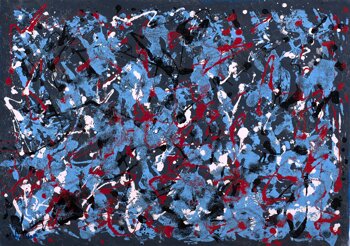
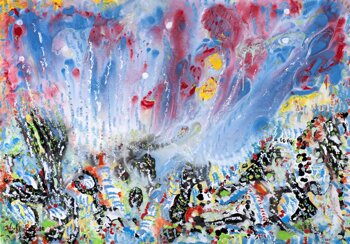
Radiant explosion
Contrasting chromaticism
Oil, enamel and acrylic on canvas cm 70x 100
Oil, enamel and acrylic on canvas cm 50x70
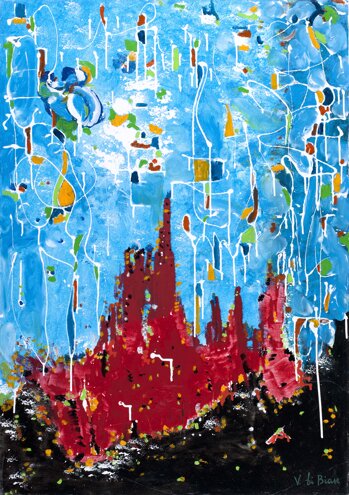
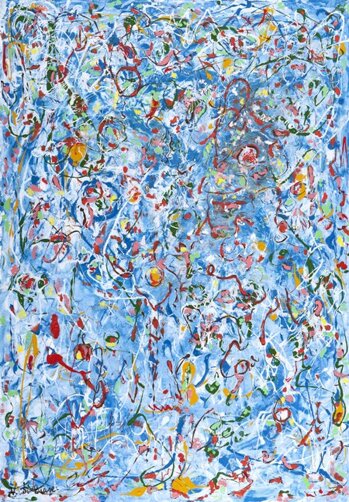
Musical sensation
Emerging from the depths
Oil, enamel and acrylic on canvas cm 70 x 100
Oil, enamel and acrylic on canvas cm 70 x 100
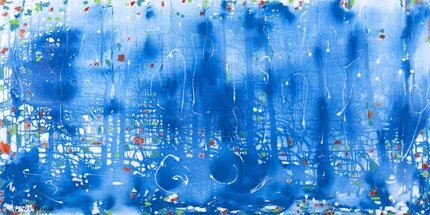
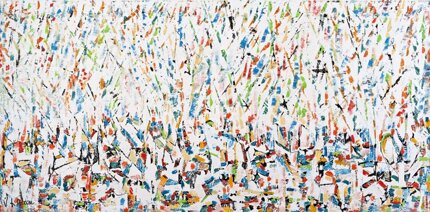
Color algebra
Transparency
Oil, enamel and acrylic on canvas cm 60 x 120
Oil, enamel and acrylic on canvas cm 60 x 120
HIS BIOGRAPHY
Vincenzo Di Biase was born in Termoli (CB) on 10-11-40. With his family he spent his childhood and youth in this Molise land. As a child he soon showed a natural talent and ease of expression for drawing and a certain
sensitivity for colour.
As a young graduate he moved to the capital, attended university and earned a degree in Mathematics at the University of Rome La Sapienza, as well as the qualification to teach Mathematics and Physics in upper secondary schools, winning the related competition.
From 1970 to 1975 he worked with the Chair of Financial and Actuarial Mathematics at the University “La Sapienza” of Rome with professors Bruno De Finetti and Bruno Rizzi.
He is the author of papers and articles of a scientific and educational nature.
He taught for almost forty years as a tenured professor of Mathematics and Physics at the Collegio Nazareno scientific high school in Rome.
He began his artistic path almost for fun.
Over the years this activity, born as secondary, became a necessary tool to express his imagination.
For three decades now Vincenzo Di Biase has been painting, externalising through colour inner moods poured into those particular marks, which the artist himself does not intend to rationalise.
Opposed to Croce’s aesthetic view, in which the equation between intuition and expression reigns, according to a rigid mechanism whereby given impressions correspond to given impressions, the artist instead agrees with the
following statement by Pirandello: “not an art as the objectification of an impression of reality, but an art that gives a subjective interpretation of the real”.
Art, therefore, is not simple knowledge. Art and Science are not opposing realities. The activities of the spirit cannot be split. While in science an unconscious imagination and a reflective logic operate, in art there is an
instinctive logic and a conscious imagination.
Because the truth of art, the truth of imagination, is not common truth.
Today certainly painting for Vincenzo Di Biase is no longer just a pastime. Vincenzo Di Biase’s canvases have been described as coming to life and bursting with emotion in the soul of those who stop to look at them. They arouse wonder and leave viewers almost speechless, who end up losing themselves in that storm of warm, cheerful, playful colours that almost seem to dance together in the void, drift apart, and then reunite in a thousand shades. Di Biase’s love for art is one that drags him along, captivates him and draws him away, taking him into the world of inner search so he can express himself and create spaces, images made of light and shadow, which are not only signs, but messages. Colour comes alive on the canvas.
CURRICULUM
Main Public Exhibitions 1999 Scuderie di Palazzo Ruspoli, Rome 1993 Sala Bramante, Rome 1994 Art and Words Prize, Hong Kong 1994 Festival of the Two Worlds, Spoleto 1994 EtruriaArte, Venturina 2004 On the road of time. Inter Team Club, Rome 2005 Marriot Hotel Cape D'Ail, Monte Carlo
Solo shows
1989 Collegio Nazareno, Rome
1992 II Campo Cultural Center, Campomarino
1992 Cultural Center, Bassano del Grappa *
1993 Pontifical Institute of Sacred Music, Rome
1993 Collegio Nazareno, Rome
1994 Cartiera Exhibition Center, Fabriano
1996 Officers’ Club at Palazzo Barberini, Rome
1997 Fonte di S. Elena, Chianciano Terme
1999 Municipality, Pontremoli
2000 Convent of San Francesco, Gualdo Tadino
2001 Rectorate Hall, Santa Cecilia in Trastevere, Rome
2002 G. Rossetti House, Vasto
2005 State Archives, Sant'Ivo alla Sapienza, Rome
2006 Orsini Castle, Soriano nel Cimino
2007 Ricciotti Foundation, Rome
2008 Torretta Valadier, Rome
Group shows
1990 Castello Svevo Prize, Termoli
1991 Tribute to Christopher Columbus, Malta
1992 ArteRoma Prize, Rome
1993 ArteRoma Prize, Rome
1993 Palazzo Farnese, Ortona
1994 Art and Words Prize, New York
1994 Michele Testa, writer and poet. An art meeting. Tor Sapienza, Rome
1996 Romartexpo Prize, Rome
1997 Sala degli Almadiani, Viterbo
2000 Espace Richelieu le carré d'or, Paris
2001 The sign within the sign. Palazzo Ducale, Sabbioneta
2002 Without borders, Benevento
2002 Nasco Project, Rome
2003 Capitolium Prize, Rome
2003 International Museum of Micro-Engraving, Rome
2004 Contemporary presences. Bishop’s Palace, Narni
2004 "4th" Acca in.. Arte Trophy", Sheraton Hotel, Rome
2005 Genius Loci, Civic Gallery of Contemporary Art, Termoli
2011 150th Anniversary of Italian Unification, Casa di Dante, Florence
2011 21st Istanbul International Art Fair, 12-20 November 2011, Istanbul
2011 54th Venice Biennale, Italy Pavilion, Sala Nervi, Turin
2013 1st International Prize, Emilio Greco Museum, Sabaudia
2013 Art Museum, Pomona, Los Angeles
2014 1st Biennial of Creativity, Verona
2014 Modern Art Gallery Le Porte, Naples
2015 National Institute of Culture in collaboration with Enel, Expo partner, Milan
Main Solo Exhibitions
1991 Augusto Consorti Gallery, Rome
1991 Mirabilia Gallery, Rome
1993 II Saggiatore Gallery, Rome
1993 Bianco Oro Gallery, Rome
1994 Augusto Consorti Gallery, Rome
1994 Winter Rotunda, Rotini Gallery, Livorno
1995 Ca' d'oro Gallery, Rome
1997 Elios Art Atelier, Rome
1997 Galleria della Tartaruga, Rome
1997 Vittoria Gallery, Rome
1998 Artists’ Cultural Center, Rome
1999 Galleria della Tartaruga, Rome
2001 Silva Splendid Exhibition Hall, Fiuggi
2002 Faleria Gallery, Rome
2003 A. Consorti Gallery, Rome
2005 Interteam Club, Rome
2006 L'Epireo Gallery, Rome
2007 Il Cielo Gallery, Rome
2009 Cassiopea Gallery, Rome
2011 Voy Restaurant, Rome
2012 Labicana 48 Arte Gallery, Rome
2014 Anacapri Art Gallery, Island of Capri
2015 Traveling through colors, Casa do Infante, Porto
THE CRITIQUE
The right color in the right place
"Every work of art is a child of its time and, often, the mother of our feelings. Likewise, every cultural period expresses its own art that will never be repeated again." Wassily Kandinsky.
Like Kandinsky, Vincenzo Di Biase embraces the same conscious refusal to represent a visible reality of objects.
In Vincenzo Di Biase’s works the viewer is not placed at the center of the painting but finds themselves within the image itself: it is colors and lines that, dancing, step out of the canvas to embrace and involve the viewer like "the music of an orchestra slowly, unhurriedly, fills the space of the stalls".
It seems that the living soul of Vincenzo Di Biase’s colors gives off a musical call, when the inflexible will of the brush tears from them a part of life.
The only difference is that music ends when one stops playing; painting does not. It endures in unchanging time, with its deafening silence, and silence is in the screams of the colors, in the lines and in the forms of these paintings.
And this music of his, closely linked to mathematics—indeed, a derivation of mathematics—emerges from his colors, in his brushstrokes, quick, nimble and fleeting, almost like a numerical synthesis. Geometric symbolism plays a decidedly fundamental role in the construction and realization of a non-figurative language.
"A large acute triangle divided into unequal sections, narrowing toward the top, represents schematically, yet precisely, spiritual life..." so wrote Wassily Kandinsky. How does the painter Di Biase know where to place his brush? Inspiration, experience, trial and error. Here lies the art of mathematics: in creating these small, marvelous poems of thought, these sonnets of pure reason. It is an art form with a wonderful capacity for transformation. There is nothing more poetic and visionary, nothing more radical, subversive and psychedelic than mathematics. Mathematics is the purest of the arts—and the most misunderstood.
In some way Vincenzo Di Biase has been able to create something beautiful and profound out of nothing—isn’t that what art is?
Vincenzo Di Biase’s works are the transcription, in numerical key, of his unconscious translated through color; it is color that reveals to us the correspondence with his soul.
He uses colors to express his words, since they are endowed with greater sensitivity and lead to subtler emotions. With colors he wins us over, captures us, possesses us.
And for Klee, painting well meant this: putting the right color in the right place. The most reflective and pure minds are those that love color above all else.
Through color we see, feel, perceive, touch and taste with all the senses of Vincenzo Di Biase.
Elisa Susanna
Privacy Policy
Cookie Policy
Legal Notice